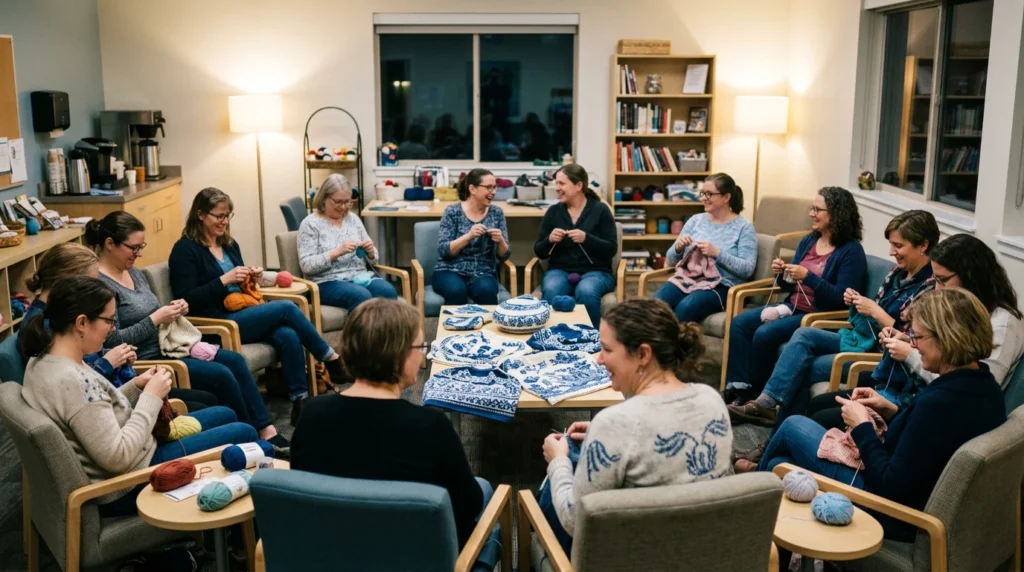
Quick answer: Check Blue Willow’s event listing for the exact date, time, any fee, and whether instruction is included. In many needlepoint shops, an “open stitch night” means you bring your current project, stitch alongside other people for a set block of time, and ask quick questions as they come up. It’s usually less structured than a class and more focused on making steady progress.
What’s Confirmed vs What’s Typical
Blue Willow’s own event listing is the right place to confirm the concrete details: start/end time, location, cost (if any), and any registration or RSVP instructions. The most reliable way to verify those specifics is to read the Blue Willow Open Stitch Night page directly, since listings can change.
In many needlepoint shops, “open stitch night” is simply a scheduled window where people gather to stitch. Typically, you bring whatever you’re working on, set up your materials, and stitch at your own pace. Conversation is common, but the level of guidance varies by shop and by how busy the staff is that evening.
If you’re trying to decide if it’s a fit, separate the “hard facts” (time, fee, RSVP, seating) from the “usual format” (social stitching, light troubleshooting). The listing should tell you the first category; the second category is what many stitchers associate with open stitch nights in general.
What You Might Do There (General Open Stitch Night Pattern)
In many needlepoint shops, open stitch nights function like informal studio time. People tend to bring a current canvas, threads, and their chart or stitch guide, then work on whatever section is next. It’s common to compare thread choices, talk through stitch placement, and watch how others handle tricky areas.
Help, when available, is usually quick and targeted: fixing a twisty thread, choosing a needle size, getting a stitch to sit correctly, or figuring out compensation near an edge. If you need a full stitch plan, color pull, or step-by-step instruction, that’s often handled through a separate class or appointment in many shops.
If you’re stuck, bring the problem area as-is. A small snag—like inconsistent tension, a drifting basketweave, or a counting mistake—can sometimes be identified faster when someone can see the exact spot and the fibers you’re using.
Before You Go Checklist
Do these quick checks so you’re not surprised at the door:
– Confirm the date and start/end time on the event listing.
– Check whether there’s a fee and how payment is handled.
– Look for RSVP or registration requirements and any seating limits.
– Verify whether staff instruction is included, limited, or not offered during the event.
– Note any guidance about what to bring (project, supplies) or any restrictions (food/drink, lighting, etc.).
Then pack for a productive session: your canvas, the threads you’re actively using, chart or stitch guide, scissors, spare needles, and a way to mark your place (highlighter tape, a clip, or a note). If you use magnification or extra light at home, consider bringing a portable option so you can stitch comfortably.
How to Get the Most Out of the Time (General Tips)
Pick one clear goal for the evening, like “finish this background block,” “test two stitch options,” or “solve this corner compensation.” Open stitch nights (in general) go best when you’re not trying to redesign the whole canvas on the spot.
If you want feedback, make your question specific: “My thread is shredding—should I shorten my lengths or change needle size?” or “How do I keep this stitch aligned across a diagonal?” Specific questions are easier for other stitchers (and staff, if they’re available) to answer quickly.
If you’re unsure what kind of help is available or you want guidance choosing next steps, ask Blue Willow Needlepoint.