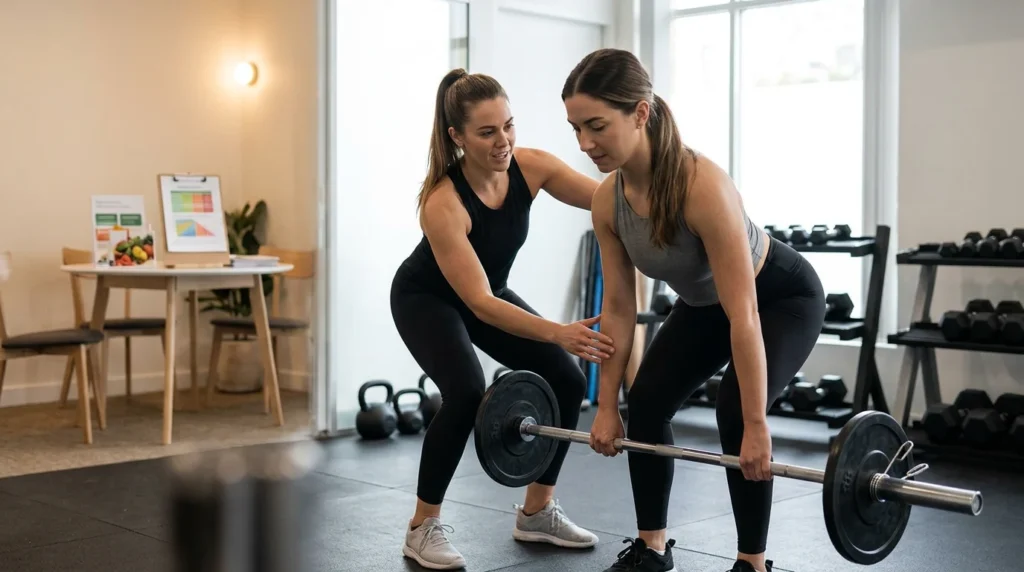
Quick answer: Exercise and nutrition coaching may help many people with PCOS by making workouts and eating habits more consistent, manageable, and tailored to common challenges like energy swings, cravings, and irregular routines. Good coaching usually emphasizes progressive strength training, sensible cardio, protein-and-fibre-forward meals, and recovery habits. The aim is a sustainable routine that can support fitness and wellbeing, alongside appropriate medical care.
What coaching changes compared with going it alone
PCOS can make “generic” fitness advice feel like it backfires: too much high-intensity work can leave you wiped out, and overly restrictive diets can trigger rebound cravings. Coaching helps by turning broad guidance into a weekly plan that matches your schedule, stress levels, sleep, and starting fitness—then adjusting it based on how your body responds.
A practical starting point is a simple structure: 2–4 strength sessions per week (full-body or upper/lower), plus low-to-moderate cardio like brisk walking or cycling on most days. The coaching value is in the details—exercise selection that protects joints, progression that avoids flare-ups, and decision rules for “tough weeks” so you don’t quit. If you want a clear overview of how training, food, and self-care fit together, pcos exercise nutrition coaching can give you a useful framework.
Coaching also adds accountability without shame. Instead of starting over every Monday, you build a repeatable baseline and learn how to adapt around travel, deadlines, or low-motivation days.
A simple 2-week starter template you can actually follow
This is a basic “get consistent” template many people tolerate well. It’s not a cure, but it can help you learn what your body handles and what it doesn’t.
Training (2 weeks):
• Day A (Full body): squat or leg press 2–3 sets, hip hinge (RDL/hip thrust) 2–3 sets, row 2–3 sets, incline press/push-up 2–3 sets, carry or plank 2 sets.
• Day B (Full body): split squat or step-up 2–3 sets, hamstring curl or hinge 2–3 sets, lat pulldown 2–3 sets, overhead press 2–3 sets, glute bridge or dead bug 2 sets.
Alternate A/B twice weekly (for example Mon/Thu). Keep 2–3 reps “in the tank” on most sets.
Daily movement: choose a step goal you can hit 5–6 days per week (a typical starting range is 6,000–8,000 steps), plus 10–20 minutes easy cycling or brisk walking on 1–3 days if you enjoy it.
Meal anchors (pick 2–3):
• Protein at each meal (for example eggs/Greek yogurt; chicken/tofu/beans; fish/lean meat/lentils).
• A high-fibre add-on twice daily (vegetables, fruit, oats, beans, whole grains).
• A planned afternoon snack if evenings are a trigger (protein yogurt + fruit; nuts + fruit; hummus + veg).
Adjustment rules: if sleep worsens for 3 nights in a row, or you feel unusually fatigued for more than 48 hours, reduce training volume by about one-third for a week (fewer sets), keep intensity moderate, and swap any intervals for easy walking. If that doesn’t settle things within 7–10 days, pause progression and consider checking in with a clinician.
What results are realistic to expect from training and nutrition changes
Exercise and nutrition changes may help support PCOS management through a few plausible mechanisms and common observations: building more muscle can improve how your body uses energy during the day, regular movement may support mood and sleep, and higher-protein, higher-fibre meals often help people feel more satisfied. These aren’t guarantees, and the same plan can feel very different person to person.
Strength training is often the backbone because it’s measurable and progressive. Many plans prioritize big patterns—squat/hinge/push/pull/carry—using dumbbells, cables, machines, or bodyweight depending on experience. A typical range is 6–12 reps for most sets, with a few heavier sets if your form is solid and recovery is good.
Cardio still matters, but the “dose” is key. Steady, moderate work (you can talk, but you’re breathing harder) is commonly better tolerated than frequent all-out intervals. Watch for signs the plan is too aggressive: worsening sleep, persistent soreness, irritability, a big drop in performance, or needing more caffeine just to function.
Medical note and safety
Coaching can support your habits and fitness, but it doesn’t replace medical care for PCOS. A GP, endocrinologist, or registered dietitian can help with diagnosis, medication decisions, and investigating symptoms that might not be training-related.
Get medical input if any of these apply: (1) new or worsening symptoms like severe fatigue, dizziness, fainting, rapid unexplained weight change, or heavy/prolonged bleeding; (2) very irregular or absent periods, or bleeding between periods; (3) fertility concerns or you’re actively trying to conceive; (4) a history of disordered eating, current binge/restrict cycles, or anxiety around food/exercise; (5) you’re on medication that affects appetite, glucose, or hormones (for example metformin) or you’re changing doses.
A good coach can also coordinate around clinical advice—using your clinician’s guidance to shape training intensity, nutrition targets, and what progress markers to track.
How to choose the right coach in East London
Look for someone who asks about your cycle patterns, sleep, stress, injury history, and current activity before prescribing anything. They should be comfortable starting conservatively, tracking a few key habits, and adjusting based on feedback—not just handing you a fixed template.
Ask how progress will be measured. Useful markers include strength trends, waist or clothing fit, energy, mood, and adherence. If you’re using the scale, it should be framed as one data point, not a weekly verdict.
An initial consult at KBPT Personal Training East London typically starts with screening questions (health history, symptoms, injuries, schedule, food routines), a few baseline measures you’re comfortable with (for example movement checks, basic strength benchmarks, step average, and optional weight/waist), and a simple tracking plan for the next 2–4 weeks. If you’re working with a GP/endocrinologist/registered dietitian, you can bring their recommendations so your training and nutrition plan stays aligned.