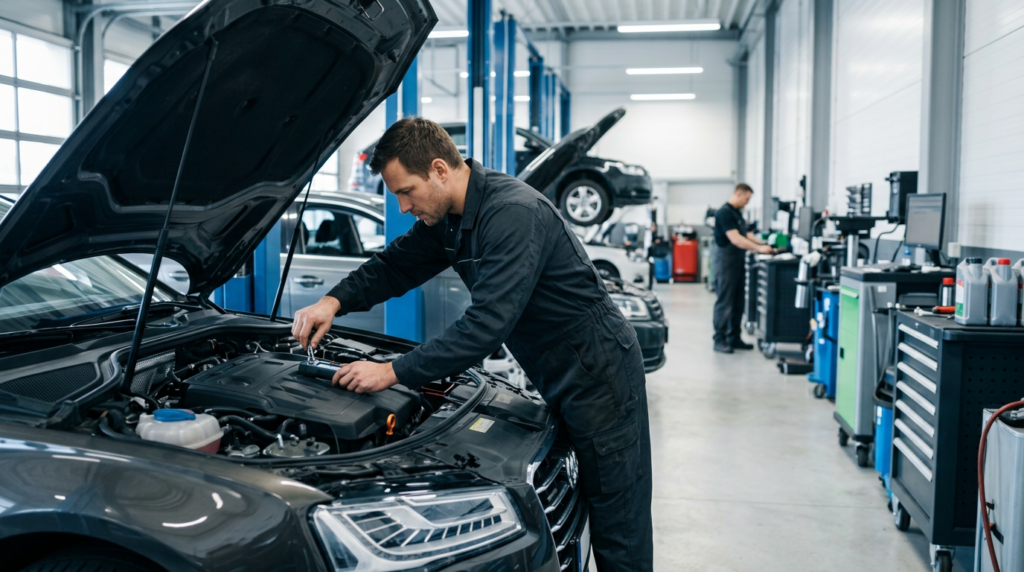
Quick answer: You can get reliable automotive repair in Sugar Hill, GA by choosing a shop that (1) employs trained technicians and uses proper diagnostic equipment, (2) provides clear, written estimates before work starts, (3) stands behind repairs with a written warranty, and (4) offers parts choices that fit your budget and goals. With any shop, verify the estimate-approval process, warranty terms, and whether parts are OEM, OEM-equivalent, or aftermarket.
How to Choose a Shop You Can Trust
Look for a shop that treats diagnosis like a process, not a guess. Good signs include modern scan tools, a test-drive or verification step, and an explanation that connects your symptom to a specific failure (for example, “misfire on cylinder 2 traced to a weak coil” rather than “needs tune-up”). If you’re comparing options for automotive repair Sugar Hill GA, listen for whether they can explain what they checked to rule out cheaper or more likely causes.
Use a few concrete criteria to narrow choices: clear communication, transparent pricing practices, and a willingness to show evidence (photos, measurements, or the old parts when practical). A trustworthy shop will separate urgent safety issues from items that can wait and will tell you what happens if you defer a repair.
With any shop you choose, verify three things up front: you’ll receive a written estimate before work begins, you understand the warranty coverage in writing (parts and labor), and you know what type of parts are being installed (OEM, OEM-equivalent, or aftermarket) and why that option was recommended.
What to Ask When You Call
A quick phone call can save time and prevent surprises. Ask these questions and write down the answers so you can compare shops consistently.
Checklist: Do you charge a diagnostic fee, and is it applied toward the repair? How do you handle estimate approval—phone call, text, or online authorization? What is the warranty length on parts and labor for this type of repair? Do you offer OEM vs aftermarket options, and will you explain the trade-offs? What turnaround should I expect for diagnosis and for the repair if parts are in stock?
If you’re dealing with a drivability or intermittent issue, also ask whether they can keep the vehicle for additional testing if the problem doesn’t show up right away, and how they communicate updates during that process.
Common Problems Drivers Encounter and What They Mean
Brake issues are common everywhere: squealing often points to worn pads or glazed surfaces, grinding can mean the pad material is gone and the rotor is being damaged, and a soft pedal can indicate air in the system or a fluid leak. Steering wheel shake during braking can be rotor-related, but worn suspension components can feel similar—diagnosis should confirm which system is actually at fault.
Check-engine lights range from minor to urgent. A loose gas cap can trigger an EVAP code, while misfires, overheating-related faults, or catalytic converter efficiency codes can worsen if ignored. A code reader only points to a system; proper diagnosis confirms the root cause before parts are replaced.
Heat can be hard on cooling systems in Georgia summers. If the temperature gauge climbs, you smell coolant, or the heater suddenly blows cold, stop driving as soon as it’s safe. Common causes include leaks, a sticking thermostat, a weak water pump, or cooling fans not coming on—continuing to drive hot can turn a manageable repair into major engine damage.
What to Expect From a Good Repair Process
A solid repair process starts with verifying the concern, then inspecting related systems. For example, a vibration complaint may involve checking tire balance, wheel condition, brake runout, and suspension joints. Findings should lead to a prioritized plan: “fix now,” “plan soon,” and “monitor,” with clear reasons for each.
Maintenance recommendations should tie back to your owner’s manual and your driving pattern. Short trips can be harder on oil and batteries; heavy traffic and heat can add stress to cooling systems and transmissions. You should be able to ask, “What problem does this service prevent?” and get a direct answer.
If you want to schedule an inspection or repair, contact Team Ryan Automotive for help.